
中文
-
About ANSO
-
News & Media
-
Members
-
Events
-
Programs
-
Publications
-
Get Involved
A four-day ANSO-COMSATS Conference on Artificial Intelligence-Enabled Solutions for Sustainable Water Governance, Security and Safety was jointly organized by the Commission on Science and Technology for Sustainable Development in the South (COMSATS) with the COMSATS University Islamabad, Pakistan, Xinjiang Institute of Ecology and Geography (XIEG), Chinese Academy of Sciences, China; and the National Research Centre, Egypt (NRC) on 22–25 September 2026. Held under the patronage of the Alliance of National and International Science Organizations for the Belt and Road Regions (ANSO) under the CAS-ANSO Conference Program, the international conference was hosted at the COMSATS Centre of Excellence, COMSATS University Islamabad (CUI), Islamabad, Pakistan. It was endorsed as an Official Activity of the International Decade of Sciences for Sustainable Development (IDSSD) 2024–2033, led by UNESCO. The event was supported by the Global Climate-Change Impact Studies Center, Pakistan, and the Pakistan Council for Research in Water Resources (PCRWR), Pakistan.
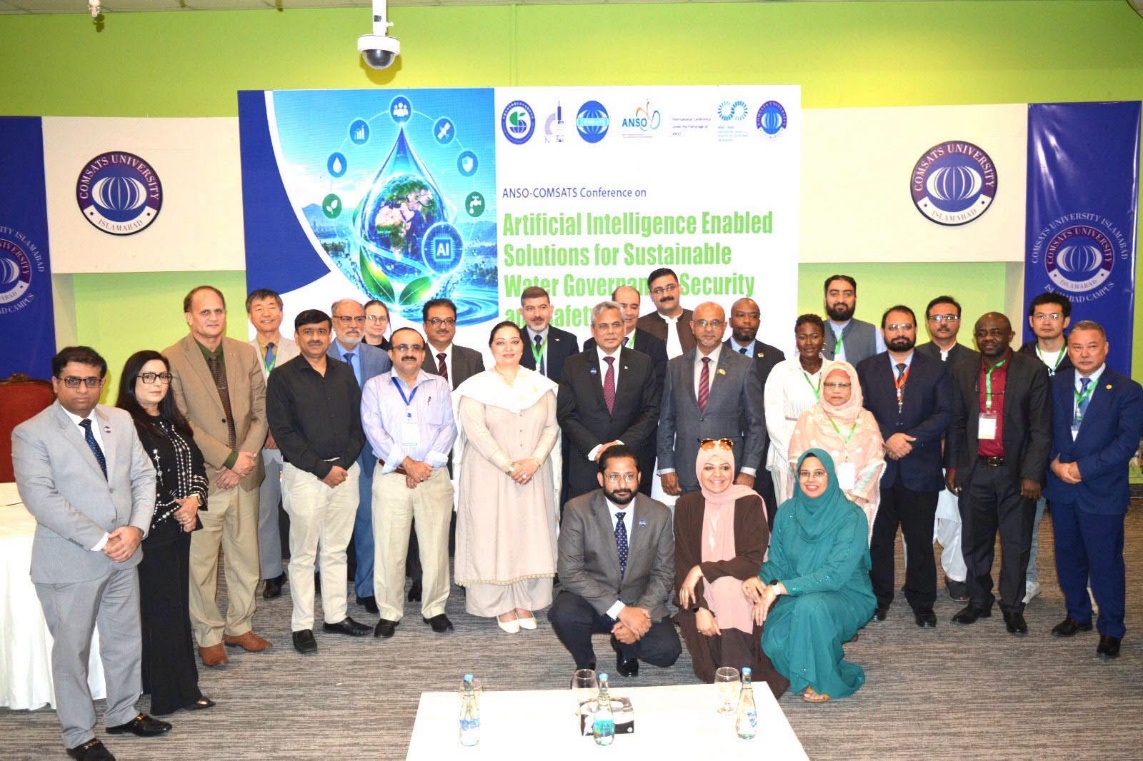
The inaugural ceremony was graced by Rana Ahmad Atteeq Anwer, Coordinator to the Prime Minister for S&T (Science and Technology) and IT&T (Information Technology and Telecommunications), Government of Pakistan, as Chief Guest. He emphasized that water systems are under unprecedented stress from climate change, rapid urbanization, industrial expansion, population growth, and pollution. Recalling Pakistan’s devastating floods of 2022, he noted that many developing countries are faced with prolonged droughts, groundwater depletion, and deteriorating water quality. He shared the Government of Pakistan’s comprehensive water-security agenda, including implementation of the National Water Policy, water harvesting, and other sustainable measures, and underlined the need for a national cohesive approach. He also congratulated the Executive Director of COMSATS, his team, ANSO, and all partner institutions for holding this critically important event.
Executive Director COMSATS, Ambassador Dr. Mohammad Nafees Zakaria, appreciated ANSO and the collaborating partners for their support. He asserted that, in the face of water-related challenges faced globally, the conference was strategically significant and that AI has a role as a transformative force. He highlighted that the conference directly supports SDG-6, while also acknowledging the need to consider associated implications. The conference featured technical presentations, hands-on training on AI tools, panel discussions, and technical visits, and Ambassador Zakaria paid tribute to Nobel Laureate Prof. Salam for his vision of COMSATS.
Prof. Dr. Raheel Qamar, Rector CUI, highlighted the importance of emerging technologies such as AI and cloud computing, stressed the need for an ethics-based approach for AI, and insisted on the element of a human loop in AI solutions. He noted that CUI’s recent initiatives of digitalization and a paperless office environment are aimed, among other things, at conserving resources and protecting the environment.
Dr. YI Zhijun, Deputy Executive Director of ANSO Secretariat, expressed his organization’s confidence in COMSATS activities and acknowledged the collaborating organizations’ support, while highlighting ANSO’s commitment to international scientific cooperation, joint research, capacity building, and knowledge exchange for sustainable development.
The inaugural ceremony was attended by the Ambassador of Zimbabwe and senior diplomats from COMSATS Member States.
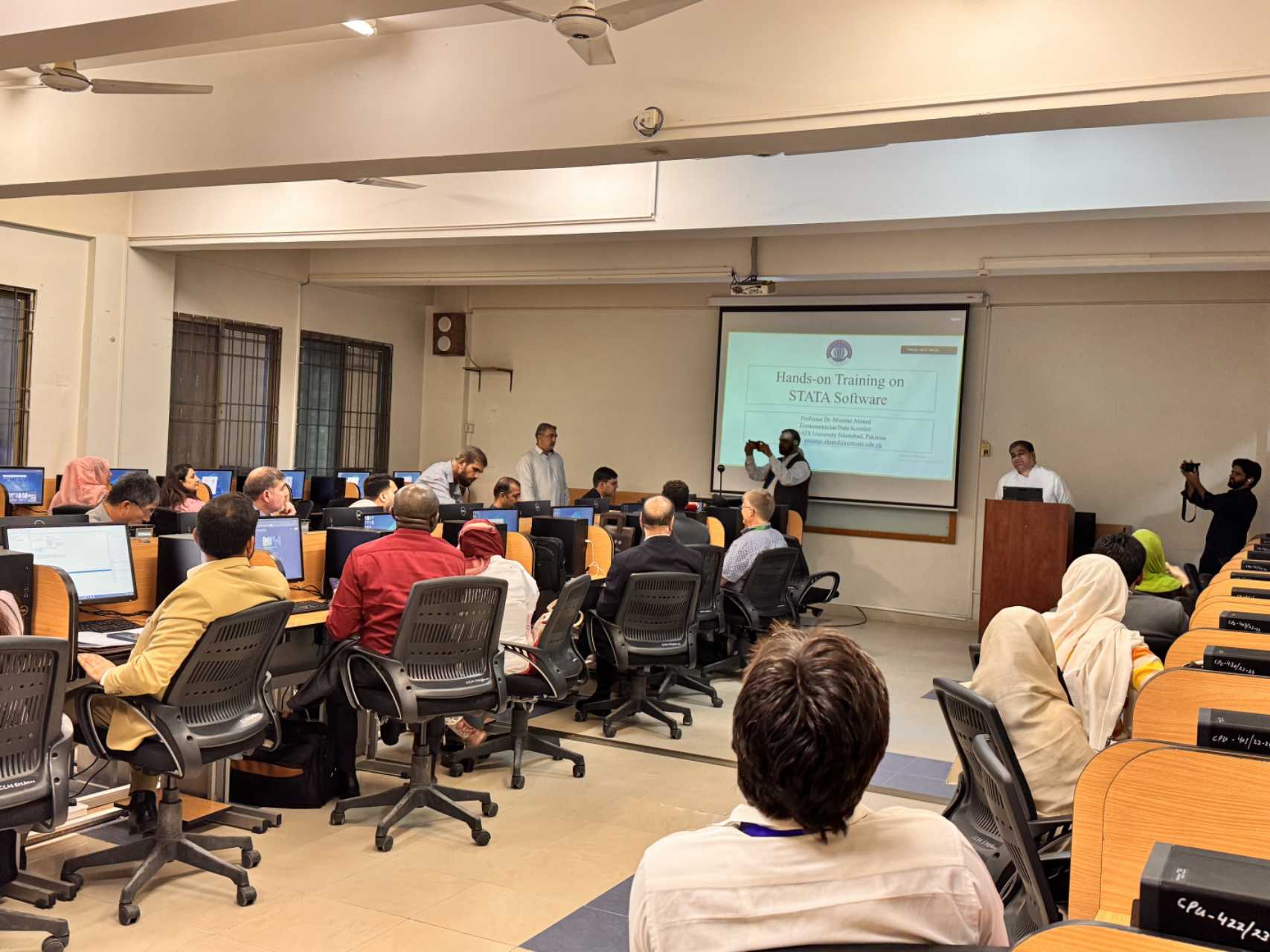
The conference concluded successfully in Islamabad, bringing together leading experts, researchers, policymakers, and practitioners to explore the transformative role of artificial intelligence, IoT (Internet of Things), and digital technologies in addressing global water challenges. The conference featured seven technical sessions, hands-on training workshops, a panel discussion, and a closing session, exploring the transformative role of AI, citizen science, and digital technologies in water safety, security, and sustainable groundwater governance. The technical sessions covered critical themes including AI and citizen science for water safety, AI-enabled geospatial intelligence for water security, bridging data gaps in water governance, smart water resource monitoring and forecasting, and the role of AI and IoT in real-time water quality management. The sessions were chaired by distinguished experts including Prof. Dr. Mohamed Saleem Elfleet (Saudi Arabia), Prof. Dr. Miklas Scholz (Germany), Prof. Dr. Kenneth Anchang Yongabi (Nigeria), Dr. Samina Ahmed (Bangladesh), Prof. Dr. Alishir Kurban (China), and Dr. Farouq Alomari (Jordan), with co-chairs Prof. Dr. Toqeer Ahmed, Mr. Adnan Faisal, and Prof. Dr. Ir. Adhi Dharma Wibawa.
Two high-level panel discussions brought together global experts to address data gaps, AI ethics, digital twins, and inclusive water governance, while a hands-on Stata training session by Prof. Dr. Mumtaz Ahmed strengthened participants’ capacity for statistical analysis and evidence-based decision-making. Foreign experts also visited NARC, Quaid-i-Azam University, PCRWR Laboratories, and Simly Dam Water Filtration Plant, organized by Prof. Dr. Toqeer Ahmed, providing insights into Pakistan’s research infrastructure and opening avenues for future collaboration and technology transfer.
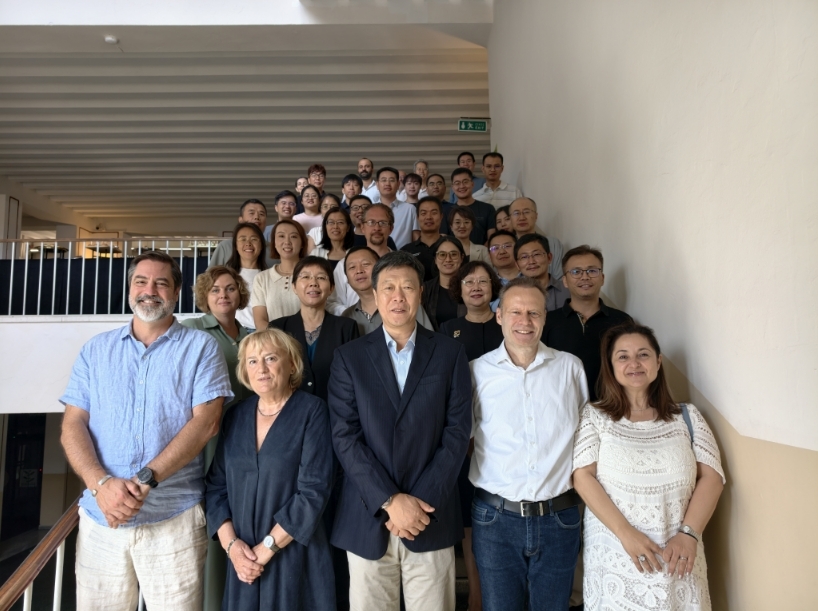
The event brought together 34 experts from Bangladesh, Belgium, China, Egypt, Germany, Indonesia, Jordan, Jamaica, Nigeria, Pakistan, Saudi Arabia and Türkiye. Approximately 37 presentations were delivered across seven sessions. 54 scientists, researchers, officers and professionals from about 20 relevant organizations in Pakistan, and over 200 students of CUI participated in person. Additionally, about 300 individuals participated online in the event.
The Closing Ceremony was graced by H.E. Romina Khurshid Alam, Coordinator to the Prime Minister on Climate Change and Environmental Coordination, Government of Pakistan, as Chief Guest. She appreciated the conference for converging expert minds to explore AI’s transformative potential in addressing water safety. She stated that for Pakistan, the conference deliberations were of critical value in view of the repeated challenges the country faced, such as the catastrophic floods of 2022 and the dual challenges of water scarcity and abundance. She shared the Government of Pakistan’s commitment to integrating climate resilience into national policies and leveraging AI for a secure water future.
COMSATS Executive Director, Ambassador Dr. Mohammad Nafees Zakaria, thanked ANSO for financing this conference of strategic importance. He noted that water challenges are common and hence need a collective approach, especially among developing countries. He urged participants to translate the insights gathered into concrete actions and expressed COMSATS’ commitment to strengthen collaboration, promote capacity building, and facilitate knowledge sharing among its member states. Prof. Dr. Junaid Mughal, Director of CUI Wah Campus, appreciated ANSO and COMSATS for organizing the conference and expressed CUI’s pleasure in hosting this important activity, highlighting the event’s particular focus on AI’s potential in monitoring, forecasting, and early warning regarding water quality management.
The Closing Ceremony was also graced by the Ambassador of Palestine, the High Commissioner of Sri Lanka, senior Diplomats of Zimbabwe and Indonesia, and the leadership of National Centre for Physics of Pakistan (NCP) and Economic Cooperation Organization Science Foundation (ECO-SF). At the closing ceremony, Shields and Certificates were presented to the Foreign and Local Speakers. Certificates were also presented to the participants. The event was concluded with the acknowledgement and support received from staff of different departments of COMSATS University Islamabad, Pakistan and staff especially IT team of COMSATS Headquarters.







 No.16 Lincui Road, Chaoyang District, Beijing, China
 86-10-84097121
 anso-public@anso.org.cn