
中文
-
About ANSO
-
News & Media
-
Members
-
Events
-
Programs
-
Publications
-
Get Involved
The “International Training Course on Health Maintenance and Sustainable Management of Acidic Soils” was successfully held in Bangkok, Thailand, from 16-21 November 2025. Co-organized by the Institute of Soil Science of the Chinese Academy of Sciences (ISSCAS) and the National Science and Technology Development Agency (NSTDA) of Thailand, the workshop received financial support from both ANSO under the CAS-ANSO Conference Program (Grant No. CAS-ANSO-C2B-2024-01) and the Nanotechnology Association of Thailand.
Nearly 60 participants from research institutions and enterprises across China, Thailand, Malaysia, Indonesia, Laos, and the Philippines attended the training course, representing diverse fields centered on agricultural resources and environmental sciences. A representative from the Embassy of the People’s Republic of China in the Kingdom of Thailand was also invited to participate in the event.
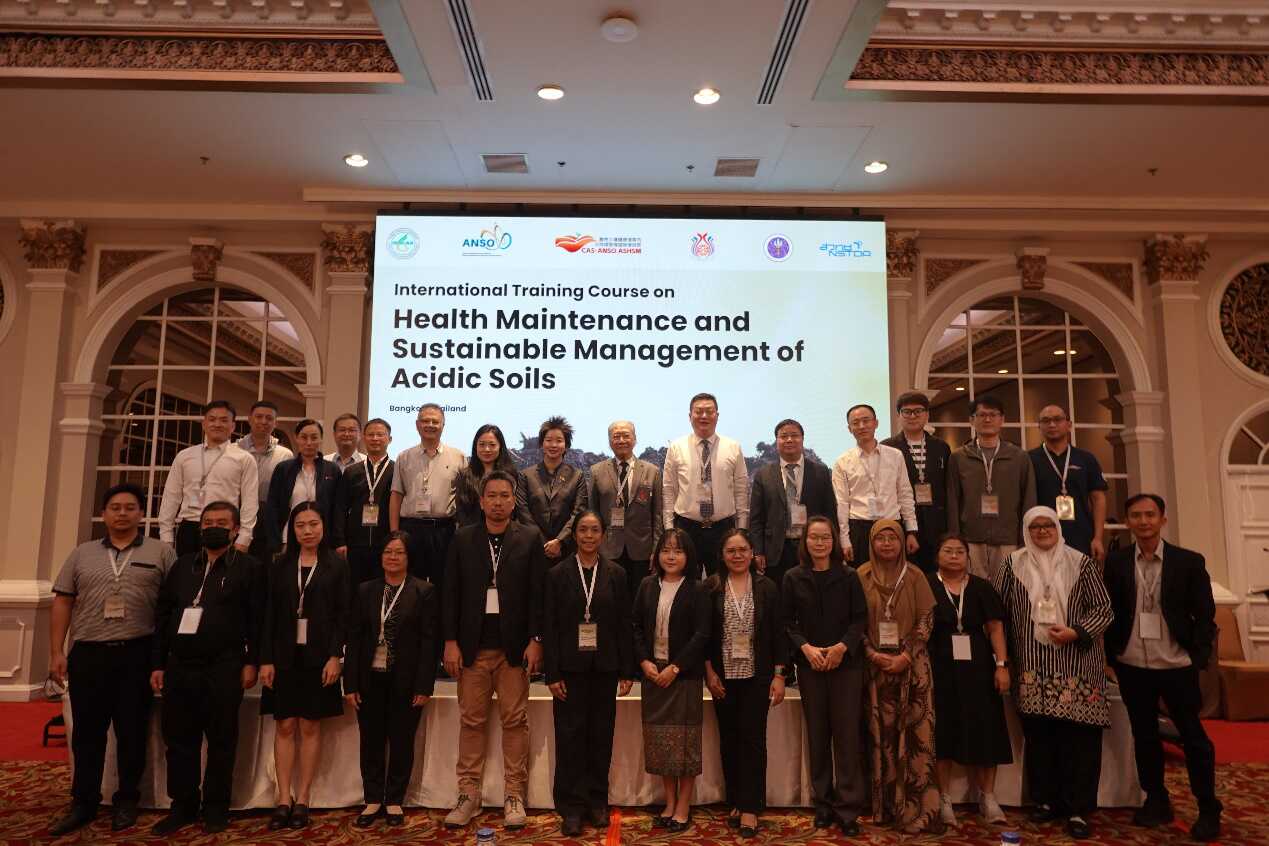
At the opening ceremony, addresses were delivered by Shen Renfang (Director, ISSCAS), Prof. Uracha Ruktanonchai (Executive Director, National Nanotechnology Center (NANOTEC), NSTDA), and Prof. Surin Laosooksathit (President, Nanotechnology Association of Thailand). Speakers emphasized that acidic soils are extensively distributed across countries and regions along the Belt and Road (B&R). Amidst the prevailing ecological vulnerability and cultivated land degradation in these areas, significant challenges are being posed to food security. They underscored that strengthening capacity building in the theories and technologies of sustainable acidic soil management is critical to advancing international agricultural cooperation in relevant areas, boosting agricultural productivity, and safeguarding ecological systems as well as food security.
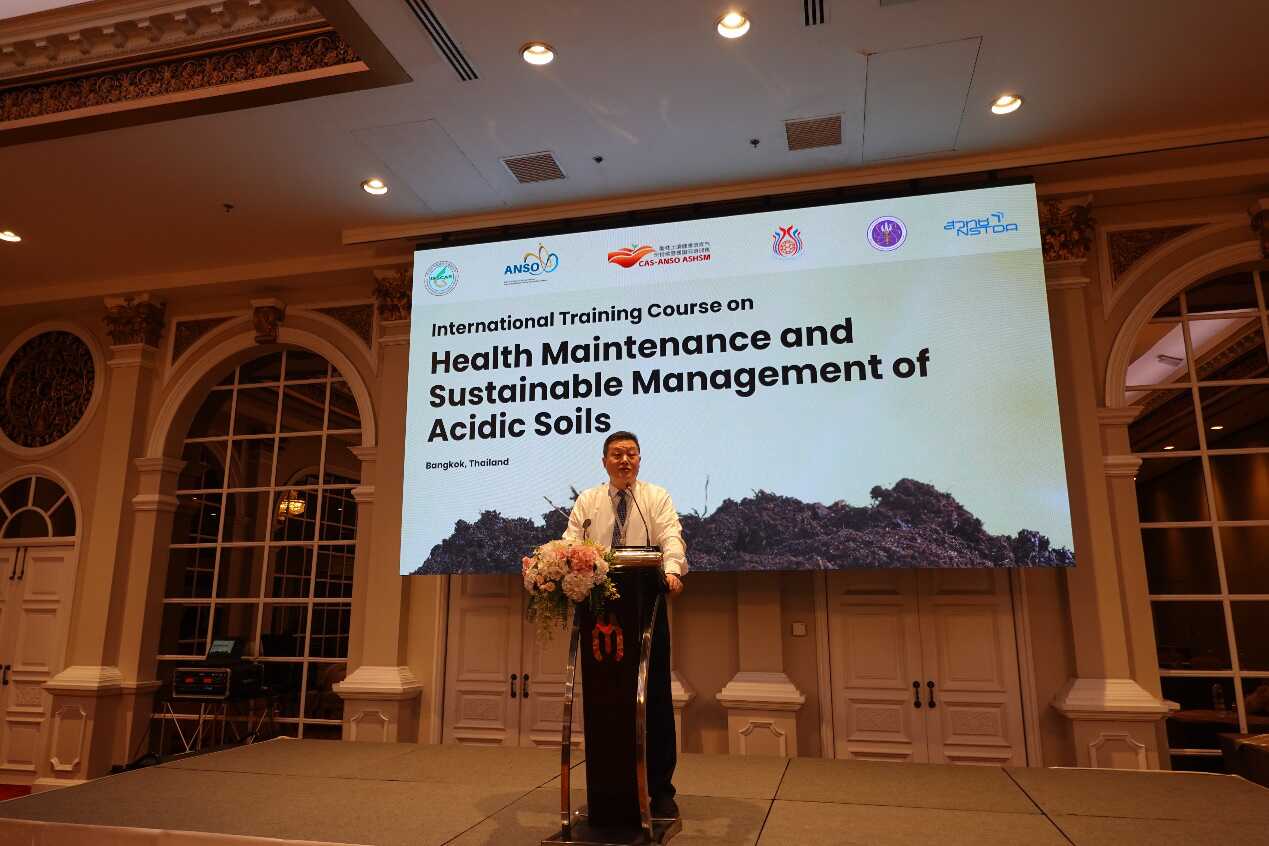
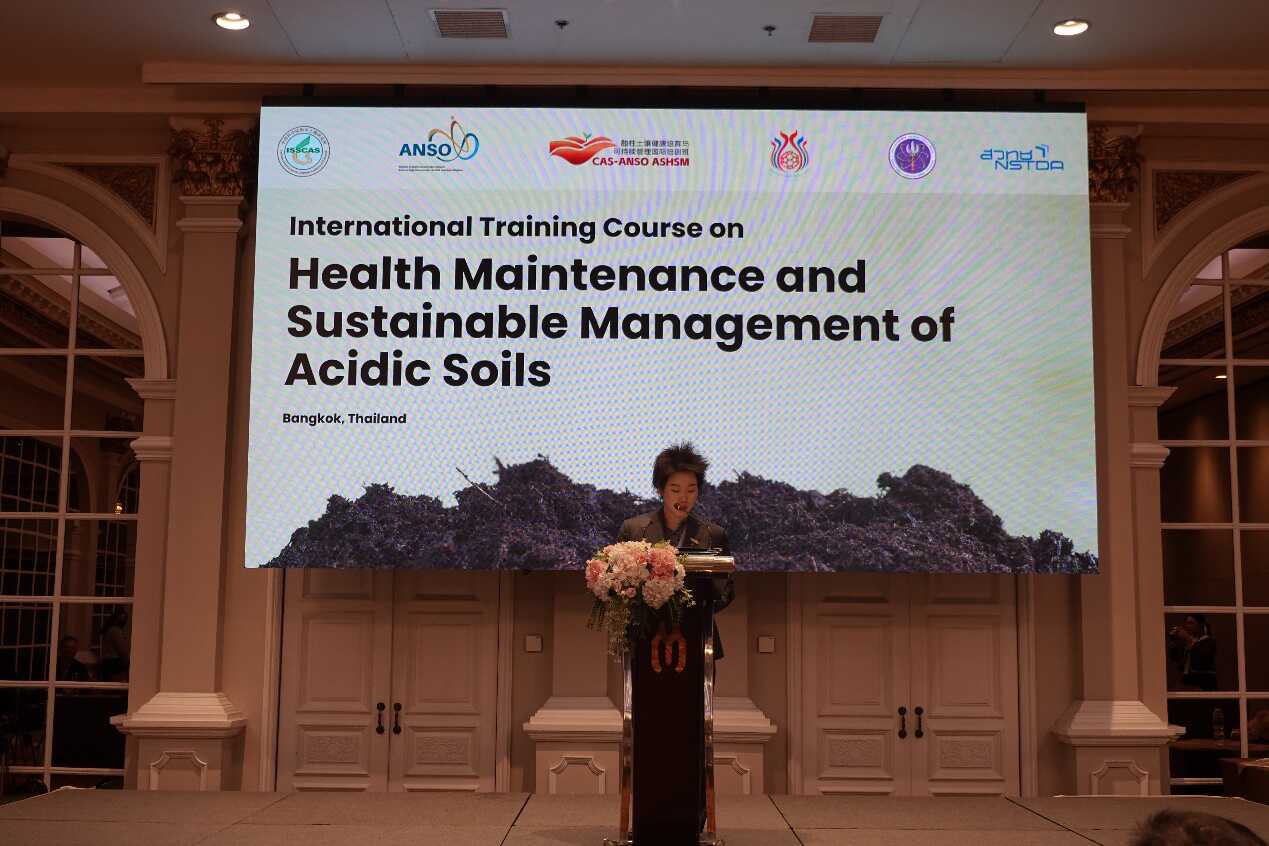
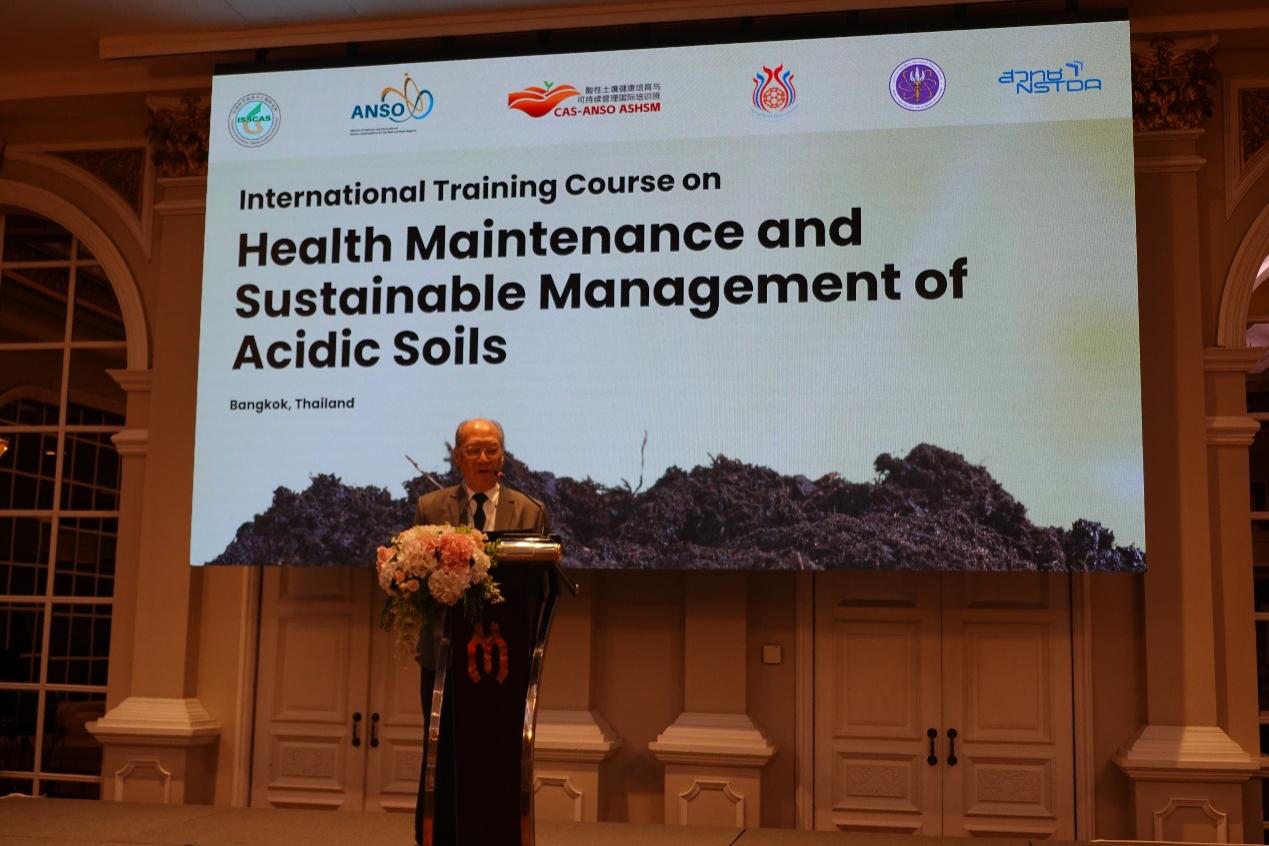
The academic session boasted a robust lineup of presentations by leading experts. Prof. Shen kicked off the session with a keynote outlining the current status and strategic solutions for the sustainable management of acidic soils. This was followed by specialized talks delivered by representatives from ISSCAS, NSTDA’s National Center for Genetic Engineering and Biotechnology (BIOTEC) and NANOTEC, as well as Mahidol University, spanning key areas including: soil microbiome research, soil acidification amelioration, soil organic matter accumulation, soil pollution and remediation, risk assessment of traditional rice cultivation, paddy field greenhouse gas emission mitigation, plant adaptation to aluminum toxicity, plant-microbe interactions, and innovative approaches to soil organic matter analysis and remote sensing-based monitoring. Participants delved into in-depth discussions on core issues across multiple fields, such as acidic soil resource utilization, soil and water conservation, and soil pollution remediation.
Following the academic presentations, NSTDA coordinated a field excursion for participants to Kasetsart University’s Kamphaeng Saen Campus. During the visit, the group toured the Molecular Biology Laboratory at the Rice Science Center and gained firsthand insights into field experiments focusing on rice variety breeding and cultivation techniques.
With the active facilitation of the ANSO Secretariat, ISSCAS and NSTDA forged formal cooperative ties for the first time and co-hosted this training workshop. Beyond significantly enhancing participants’ professional capabilities, the initiative served as a bridge for interdisciplinary and cross-regional exchanges, laid the groundwork for a long-term network of researchers in related fields, and yielded initial cooperation intentions regarding initiatives including international conferences on acidic soil research, researcher exchange visits, and joint applications for scientific research projects. This established a solid foundation for the sustainable use of soil resources and sustainable agricultural development across the B&R countries and regions.







 No.16 Lincui Road, Chaoyang District, Beijing, China
 86-10-84097121
 anso-public@anso.org.cn