
中文
-
About ANSO
-
News & Media
-
Members
-
Events
-
Programs
-
Publications
-
Get Involved
From 18 to 22 June 2026, the ANSO-CPJRC-COMSATS International Training Workshop on Disaster Risk Reduction and Green Development for the China-Pakistan Economic Corridor (CPEC) was successfully held in Islamabad, Pakistan, with financial support from the CAS-ANSO Conference Program.
The workshop was jointly organized by the China-Pakistan Joint Research Center on Earth Sciences (CPJRC), the Commission on Science and Technology for Sustainable Development in the South (COMSATS), the UNESCO Chair on Mountain Disaster Risk Reduction and Resilience, and the Alliance of International Science Organizations on Disaster Risk Reduction (ANSO-DRR). More than 80 participants from Pakistan, Bangladesh, Afghanistan, Syria, Somalia and other countries took part in the workshop, covering personnel from government bodies, research institutions, higher education establishments, and related professional fields.
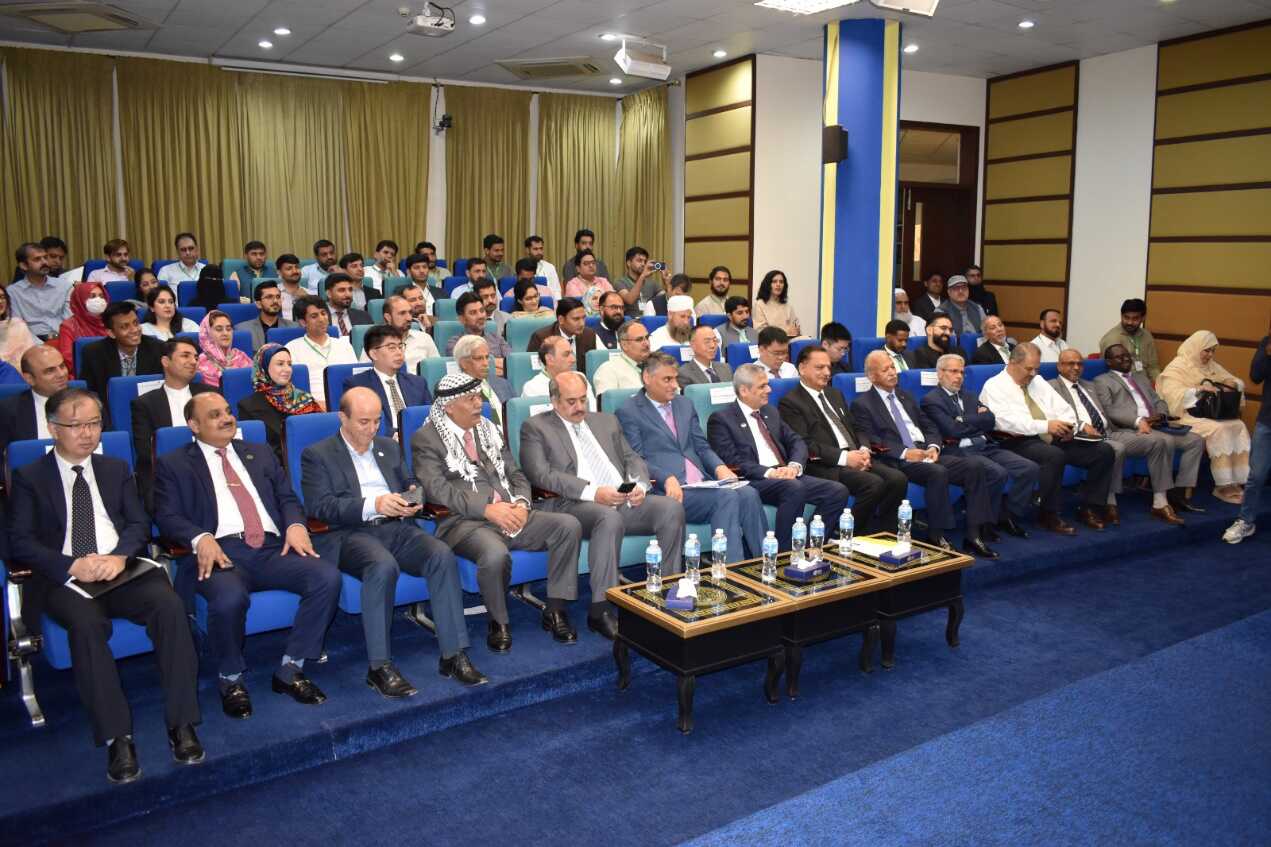
As an endorsed activity of the International Decade of Sciences for Sustainable Development (2024–2033)—an initiative proclaimed by the United Nations General Assembly and implemented under the lead of UNESCO, the workshop addressed the pressing demands for disaster risk reduction and green development across the China-Pakistan Economic Corridor and its surrounding regions. It sought to strengthen the scientific and technological capacities of professionals from Global South countries in disaster risk governance, climate change adaptation, and sustainable development, while fostering cross-border scientific collaboration and knowledge exchange. The event fully demonstrated ANSO’s commitment to advancing global sustainable development through scientific partnership, capacity building, and talent cultivation.
The opening ceremony took place at COMSATS University Islamabad on 18 June and was addressed by Dr. Fuad Pashayev, Director and Representative of UNESCO Office in Pakistan; Dr. Safdar Ali Shah, Director of the CPEC Office at the Higher Education Commission of Pakistan; Mr. Yin Shengxin, First Secretary (S&T) of Embassy of China in Pakistan; Prof. Hong Tianhua, Executive Director of CPJRC; Ambassador Dr. Mohammad Nafees Zakaria, Executive Director of COMSATS; Prof. Dr. Raheel Qamar, Rector of COMSATS University Islamabad; Prof. Zafar Nawaz Jaspal, Vice Chancellor of Quaid-i-Azam University; and Prof. Liu Weidong, ANSO Executive Director (video remark).
The ceremony also drew participation from ambassadors and senior diplomatic officials based in Pakistan, representing Sri Lanka, Ethiopia, Iran, Kazakhstan, Nigeria, Palestine, Syria, Azerbaijan, China, Yemen, and other countries. Their extensive attendance underscores the firm commitment of the international community—particularly Global South countries—to enhance scientific cooperation for jointly tackling climate change and disaster risks.
In his keynote address, Dr. Fuad Pashayev pointed out that climate change, natural disasters, and environmental degradation pose severe challenges to global sustainable development. He highlighted that science-based decision-making, professional education and training, knowledge sharing and international cooperation are instrumental to strengthening disaster risk governance and building societal resilience. He also reaffirmed UNESCO’s commitment to supporting developing countries in enhancing disaster risk reduction, climate resilience, and sustainable development capacities.
Prof. Liu Weidong noted that ANSO has long advanced international scientific cooperation and capacity building across the Belt and Road partner countries, with disaster risk reduction and green development consistently standing as core priority areas. He encouraged participants to fully leverage the platform, deepen academic exchanges and collaborative partnerships, and translate acquired knowledge and skills into practical initiatives to advance sustainable development in their respective countries and regions.
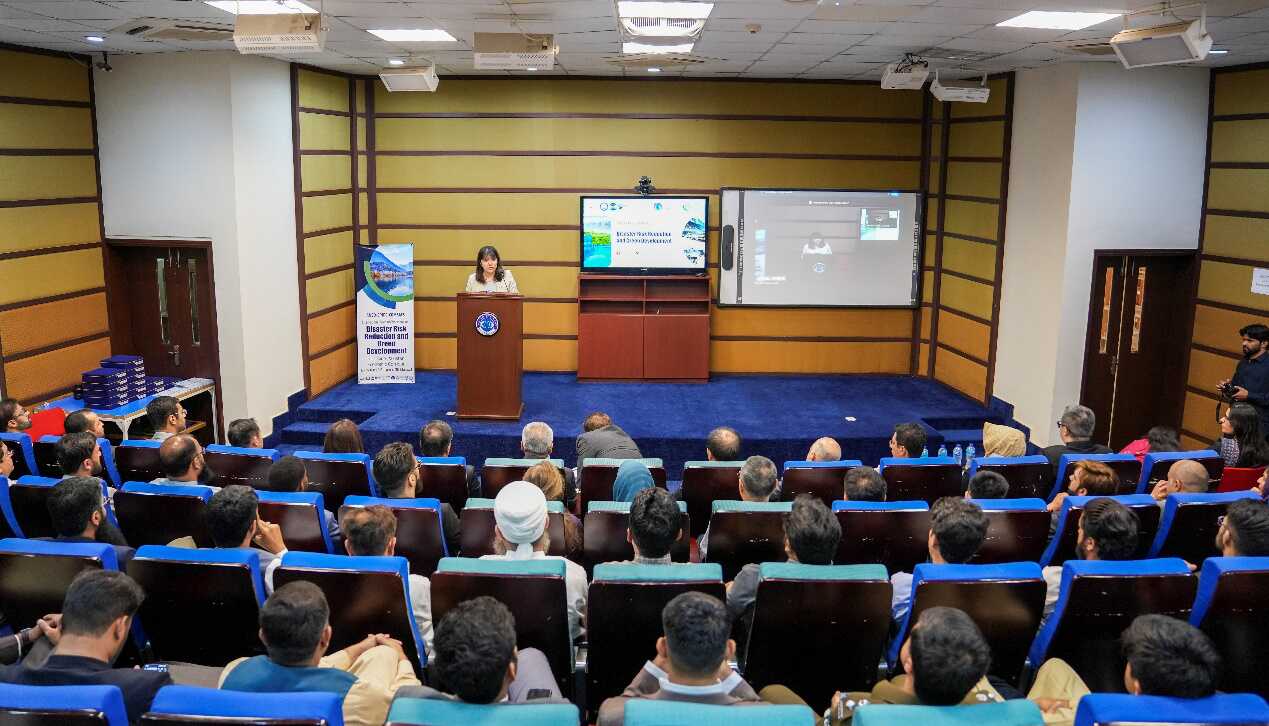
The five-day workshop featured lectures and practical training sessions delivered by seasoned experts from the Institute of Mountain Hazards and Environment, the Institute of Geographic Sciences and Natural Resources Research, two institutions affiliated with the Chinese Academy of Sciences, and the National Disaster Management Authority of Pakistan. The curriculum covered topics such as disaster risk assessment and numerical modelling, mountain hazard monitoring and early warning, digital disaster management, carbon cycle and climate action, green development, and low-carbon transition. Through lectures, case studies, interactive discussions, and practical exchanges, the workshop systematically enhanced participants’ professional capacities in disaster risk reduction and sustainable development.
To help participants better understand global scientific cooperation mechanisms, the workshop arranged a dedicated special session on ANSO. It briefed attendees on ANSO’s development progress, core missions, and tailored capacity-building initiatives for Belt and Road countries, further motivating participants to engage in international scientific cooperation networks.
Experts from the Chinese Academy of Sciences shared China’s advanced concepts, key technologies, and practical experiences in mountain hazard monitoring and early warning, digital disaster reduction, ecological restoration, climate change adaptation, and green development, which won high recognition from all participants. Participants gained a clearer understanding of disaster risk governance and sustainable development, as well as improved practical abilities in risk assessment, early warning and resilience building. They acknowledged that China’s experience provides useful references for developing countries, and the workshop facilitates future academic cooperation, talent exchange, and knowledge sharing.
The workshop concluded with a closing ceremony on 22 June. Ms. Romina Khurshid Alam, Coordinator to the Prime Minister of Pakistan on Climate Change and Environmental Coordination, delivered a keynote video address. She highly commended the sustained efforts of ANSO, CPJRC, and COMSATS, and expressed anticipation for continued collaboration to strengthen climate resilience and sustainable development capabilities.
Prof. Muhammad Akmal, Chairman of the Pakistan Science Foundation, commended the workshop’s fruitful outcomes and reaffirmed ongoing support for scientific cooperation and capacity-building initiatives targeting disaster risk reduction and green development. On behalf of the organizing committee, Dr. Lei Yu, Deputy Director of CPJRC, delivered the vote of thanks. Certificates were awarded to participants who completed the program and submitted training reports.
The successful organization of the workshop further exemplified ANSO’s key role in promoting South-South cooperation, facilitating international scientific exchanges, and strengthening capacity building for Global South countries. Moving forward, ANSO will continue collaborating with international partners through multilateral scientific cooperation networks to deliver high-level capacity-building programs, facilitate knowledge sharing and joint innovation in disaster risk reduction, climate change adaptation, and green development, and contribute scientific solutions to the delivery of the United Nations Sustainable Development Goals.









 No.16 Lincui Road, Chaoyang District, Beijing, China
 86-10-84097121
 anso-public@anso.org.cn