
中文
-
About ANSO
-
News & Media
-
Members
-
Events
-
Programs
-
Publications
-
Get Involved
A China‑Egypt joint innovation co‑funded by the Alliance of National and International Science Organizations for the Belt and Road Regions (ANSO) has received the Gold Award at BRICS Inventions 2026. Co-developed by Associate Professor Yinghui Han from the University of Chinese Academy of Sciences and Professor Yasser Mahmoud Ali Mohamed from Egypt’s National Research Centre, the project targets climate‑adaptive energy self‑sufficiency and coupled carbon‑nitrogen governance for the Global South. Authorized by the International Federation of Inventors’ Associations (IFIA), BRICS Inventions imposes a stringent multi‑round assessment by international experts. Its Gold Award recognizes outstanding originality, on‑site demonstration performance, and scalability, serving as a prestigious international endorsement for South‑South collaborative innovation.
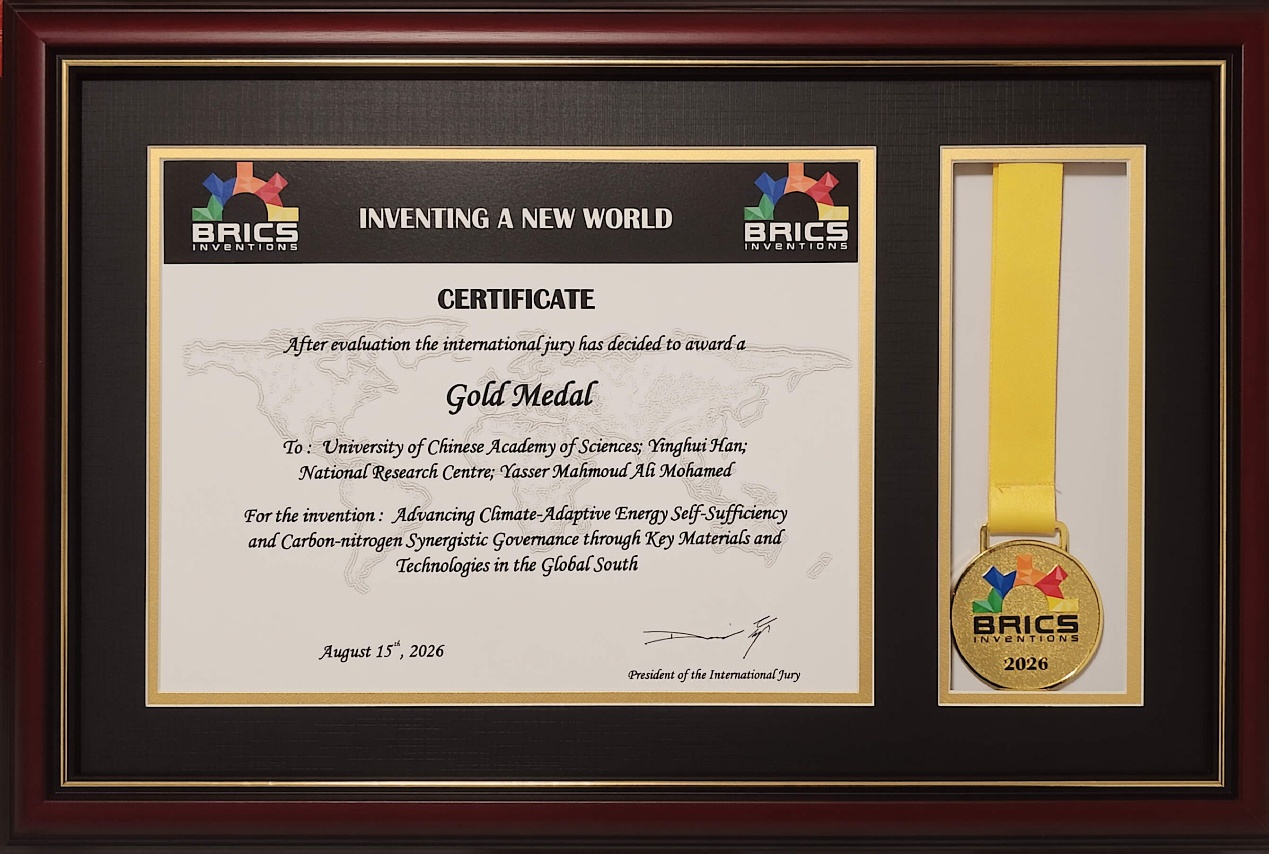
This project serves as an exemplary case of equal partnership and joint research among scientists from Belt and Road countries supported by ANSO. Associate Professor Yinghui Han from the University of Chinese Academy of Sciences devotes her research to non-CO₂ greenhouse gas mitigation, clean energy, and coupled carbon‑nitrogen governance. She leads the design of the overall technical framework, the development of energy storage materials, and the smart carbon verification module. Professor Yasser Mahmoud Ali Mohamed from the National Research Centre, Egypt, specializes in photocatalysis and its applications. He spearheaded the development of bio‑stimulants to efficiently boost crop nutrient uptake. To address the intertwined challenges of energy poverty, ecological degradation, and food insecurity prevalent in the Global South, the two scientists and their China‑Egypt joint team carried out collaborative research and built an integrated technical package consisting of clean‑energy storage materials, coupled carbon‑nitrogen sequestration and remediation, and AI‑powered smart carbon verification. Through cross‑climatic‑zone field demonstrations and experience sharing between China and Egypt, the technology provides core support for coupled carbon‑nitrogen management and crop yield improvement in agri‑food systems on the Qinghai‑Tibet Plateau, the cold farmlands of the Sanjiang Plain in Northeast China, and the Nile River basin. Field demonstrations of the project have been completed across these three sites.
This joint work was previously selected as one of only two national typical international‑cooperation cases for climate‑change implementation in 2026 by China’s National Climate Strategy Center. Boasting a full intellectual‑property portfolio of 10 patents, 8 software copyrights and over 30 peer‑reviewed SCI publications. Supported by formal technical standards and international certifications, the solution is ready for large‑scale roll‑out across Global‑South regions.
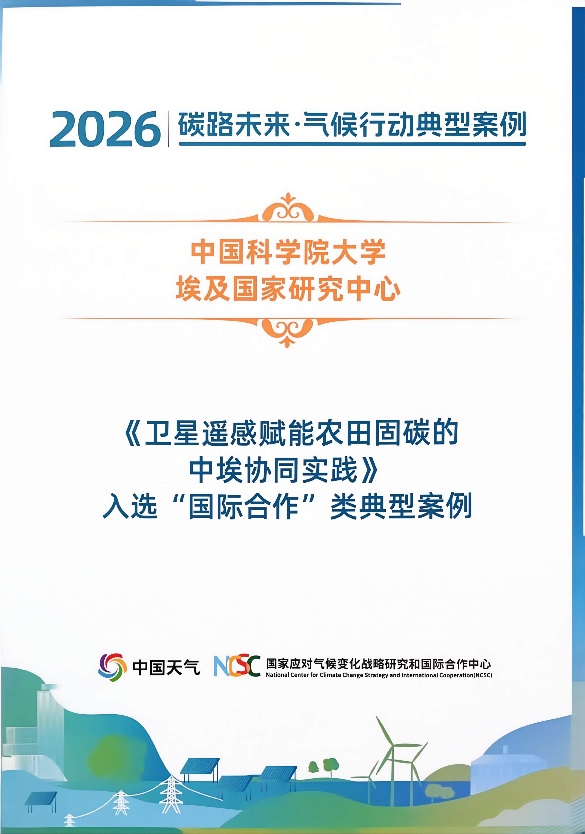
This honor demonstrates ANSO’s strength as a platform facilitating joint research on climate‑resilient agro‑food security among developing nations, marking a landmark achievement of China‑Egypt science cooperation under ANSO auspices. Moving forward, ANSO will keep supporting cross‑border collaborative research among member scientists, foster cost‑effective, locally‑adapted climate technologies, and contribute to the BRICS innovation partnership as well as the United Nations Sustainable Development Goals.







 No.16 Lincui Road, Chaoyang District, Beijing, China
 86-10-84097121
 anso-public@anso.org.cn