
中文
-
About ANSO
-
News & Media
-
Members
-
Events
-
Programs
-
Publications
-
Get Involved
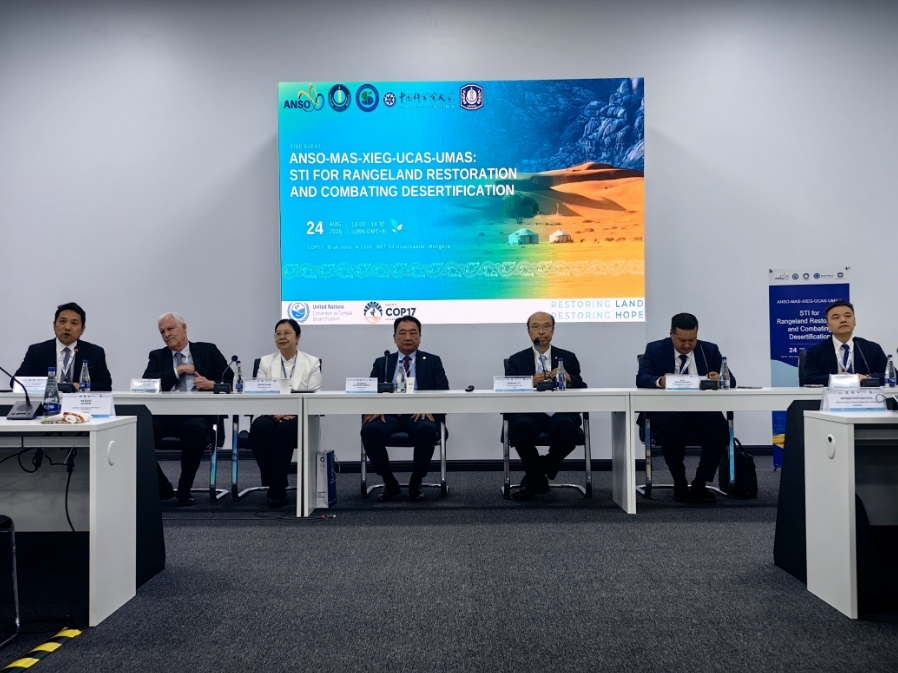
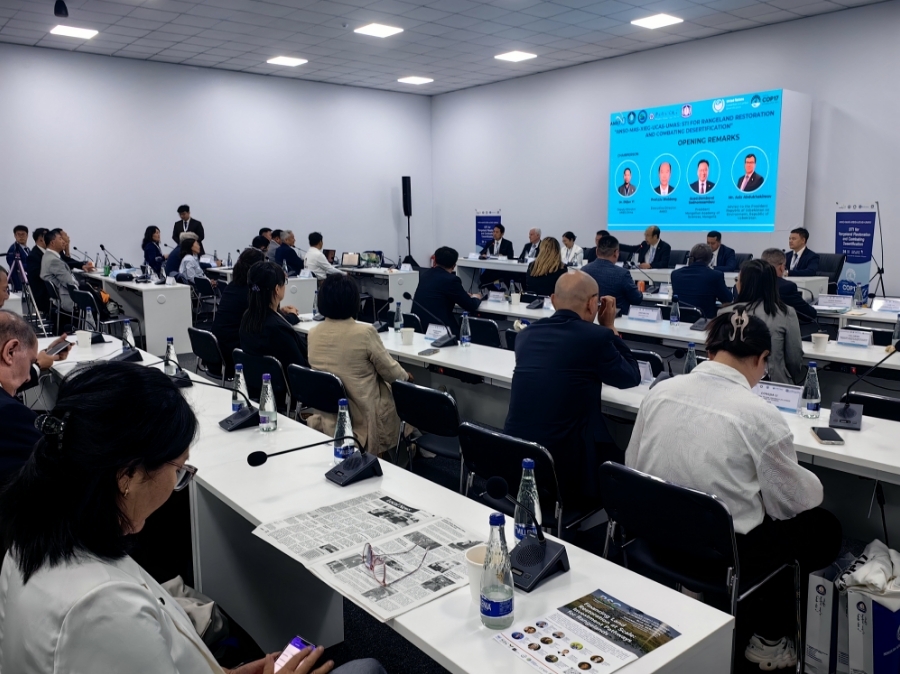
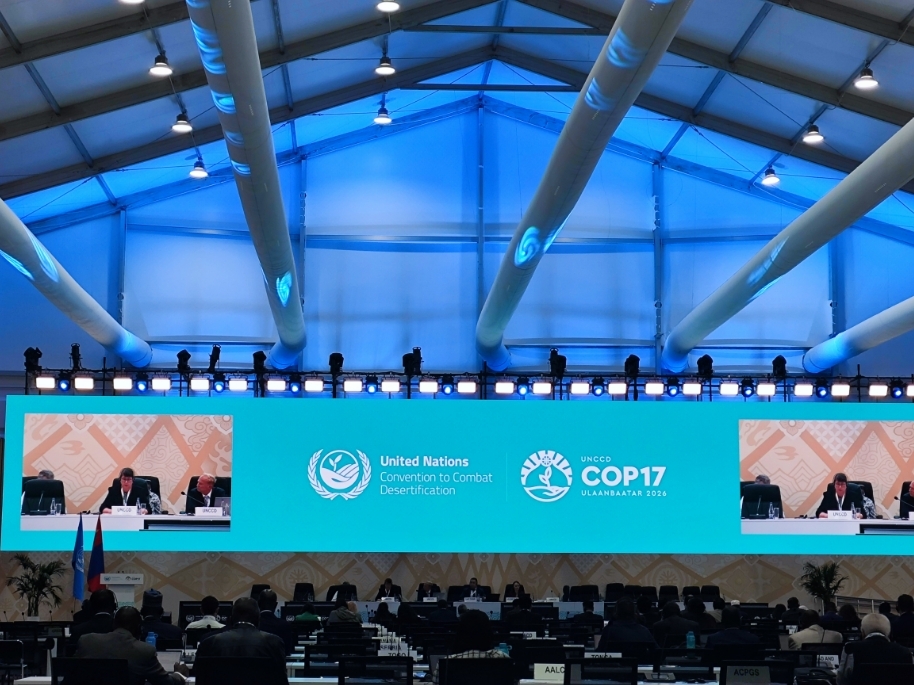
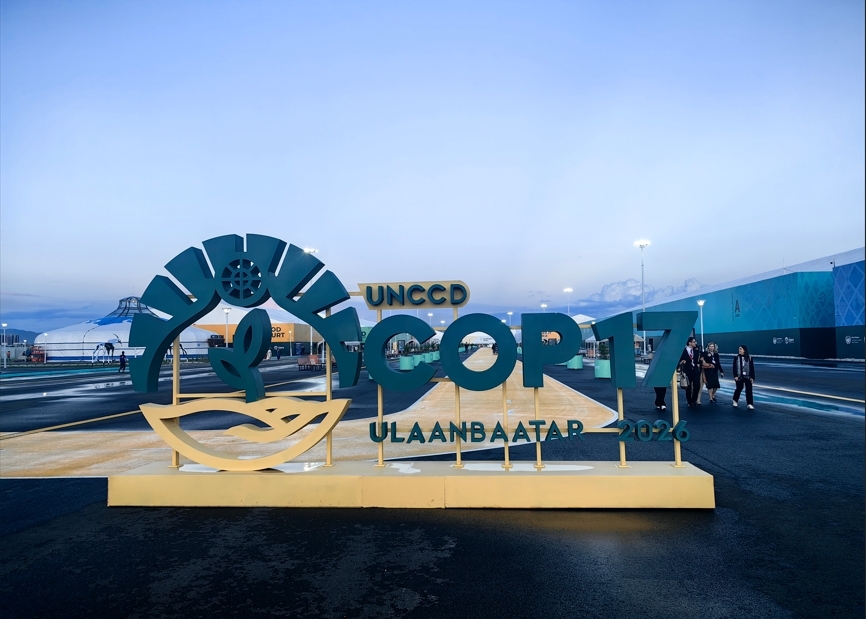
Ulaanbaatar, 24 August 2026—On the sidelines of the 17th Session of the Conference of the Parties to the United Nations Convention to Combat Desertification (UNCCD COP17), a side event in blue zone themed “STI for Rangeland Restoration and Combating Desertification” was jointly hosted by the Alliance of National and International Science Organizations for the Belt and Road Regions (ANSO), the Mongolian Academy of Sciences (MAS), the Xinjiang Institute of Ecology and Geography of the Chinese Academy of Sciences (XIEG), the University of Chinese Academy of Sciences (UCAS), and the University of the Mongolian Academy of Sciences (UMAS).
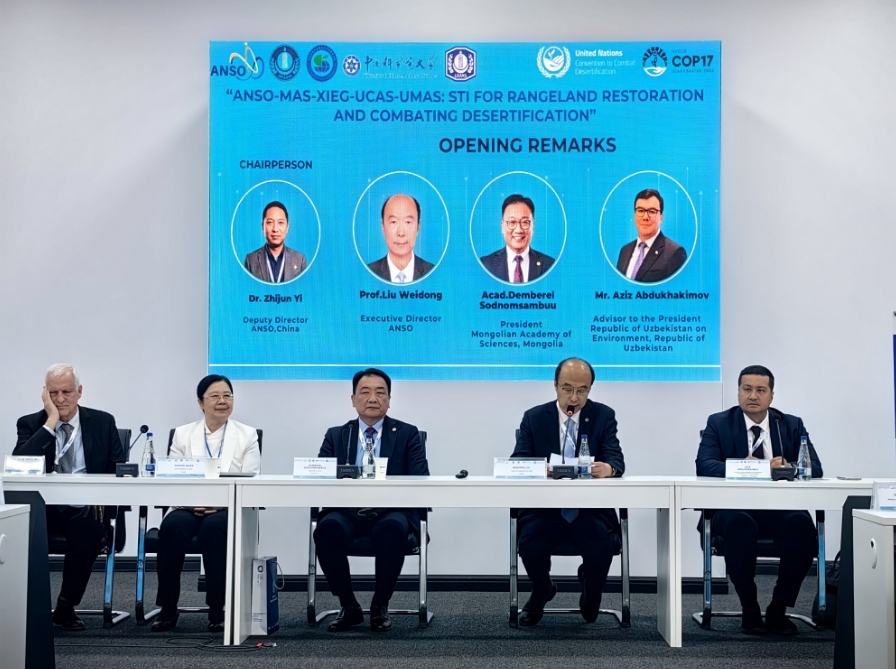
Opening addresses were delivered by Prof. LIU Weidong, Executive Director of ANSO; Acad. Demberel Sodnomsambuu, President of MAS; and Mr. Aziz Abdukhakimov, Adviser to the President of the Republic of Uzbekistan on Environmental Issue and Chairman of the National Committee on Ecology and Climate Change of the Republic of Uzbekistan. Dr. Barron Joseph Orr, Chief Scientist of the UNCCD Secretariat, delivered closing remarks on behalf of the Secretariat.
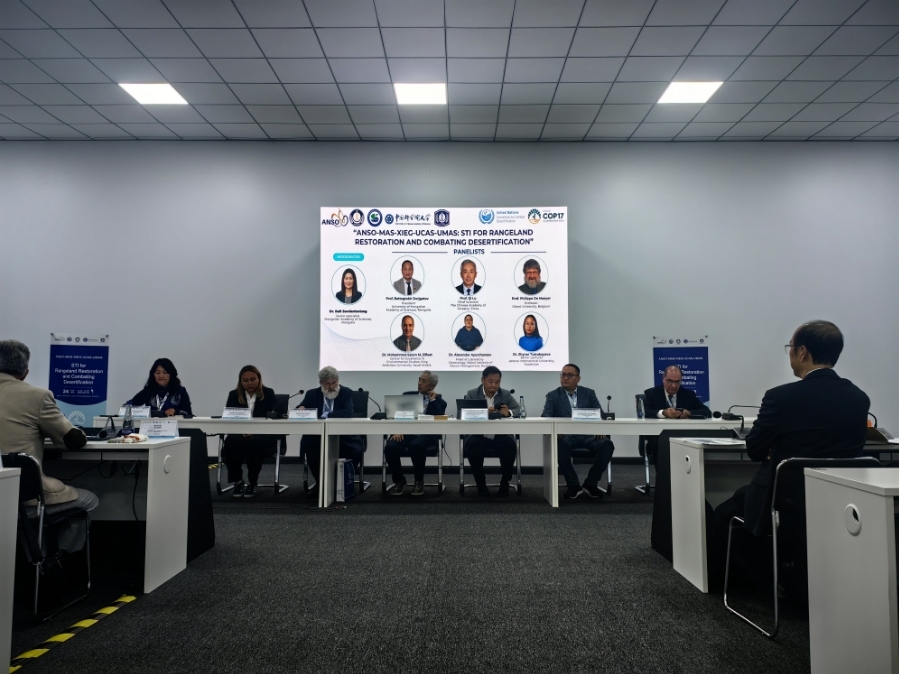
The side event was moderated by Dr. YI Zhijun , Deputy Director of the ANSO Secretariat,and Dr. Balt Suvdantsetseg, Senior Officer at the MAS. The panel discussion brought together six renowned experts. The panelists reviewed the practical value of the newly released ANSO science reports and discussed concrete measures to advance regional multilateral scientific cooperation under the ANSO Initiative. Panelists included: Prof. Battogtokh Dorjgotov, President of the University of the UMAS; Dr. Alexander Ayurzhanaev, Head of the Laboratory of Geoecology at the Baikal Institute of Nature Management, Siberian Branch of the Russian Academy of Sciences; Prof. LU Qi, Chief Scientist of the Chinese Academy of Forestry; Dr. Shynar Tustubayeva, Senior Lecturer at the Astana International University (Kazakhstan); Prof. Philippe De Maeyer, Ghent University (Belgium); and Prof. Mohamed S. Elfleet, King Abdulaziz University (Saudi Arabia). The panelists agreed that the ANSO Initiative and science reports offer valuable references for multilateral scientific cooperation, facilitating the exchange of experiences and case studies and benefiting sustainable development in dryland regions. They also pledged to advance concrete actions under the Initiative by expanding dryland research networks, sharing monitoring datasets, scaling up technology transfer, fostering youth exchanges and coordinating multilateral activities.







 No.16 Lincui Road, Chaoyang District, Beijing, China
 86-10-84097121
 anso-public@anso.org.cn