
中文
-
About ANSO
-
News & Media
-
Members
-
Events
-
Programs
-
Publications
-
Get Involved
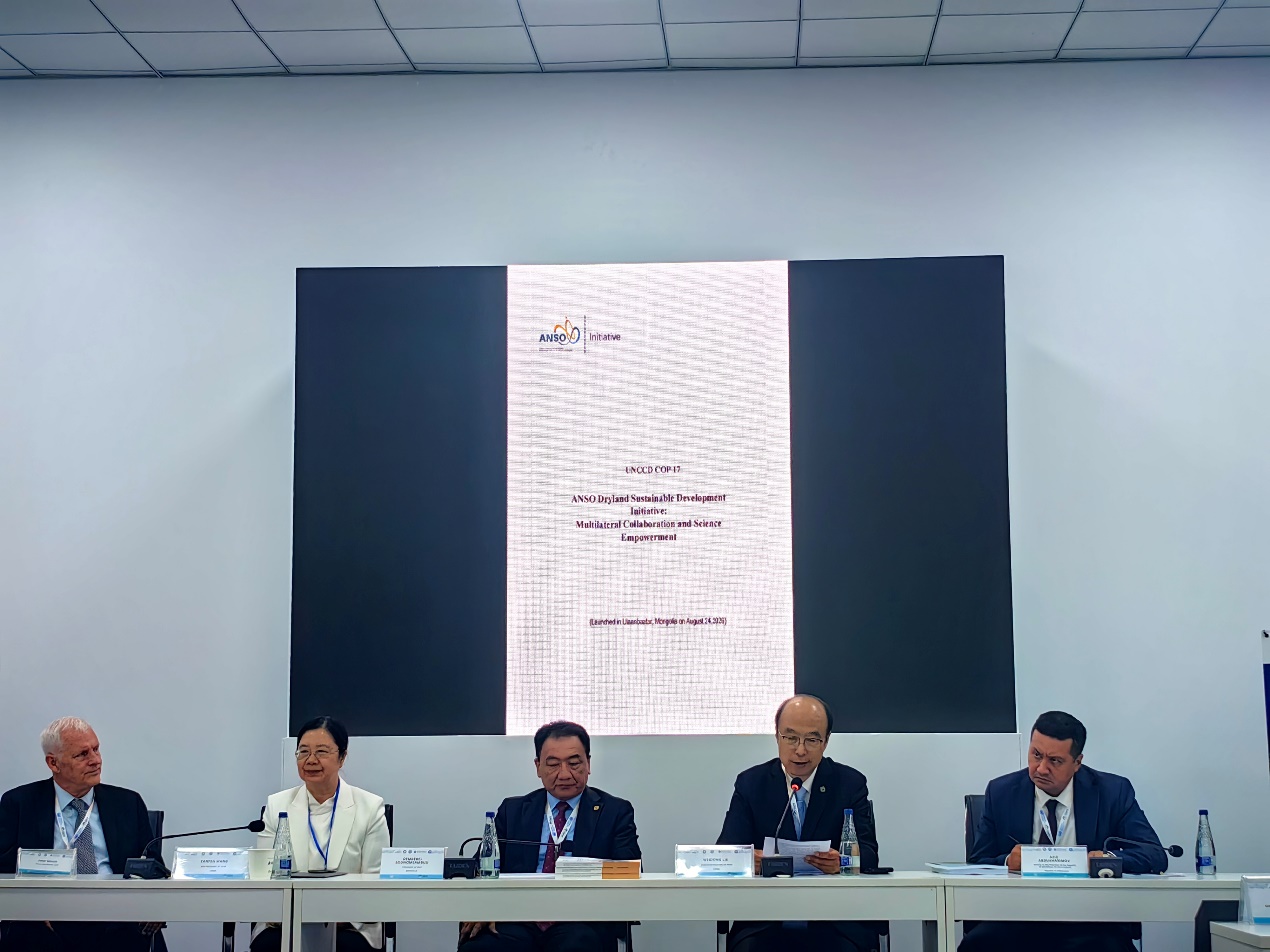
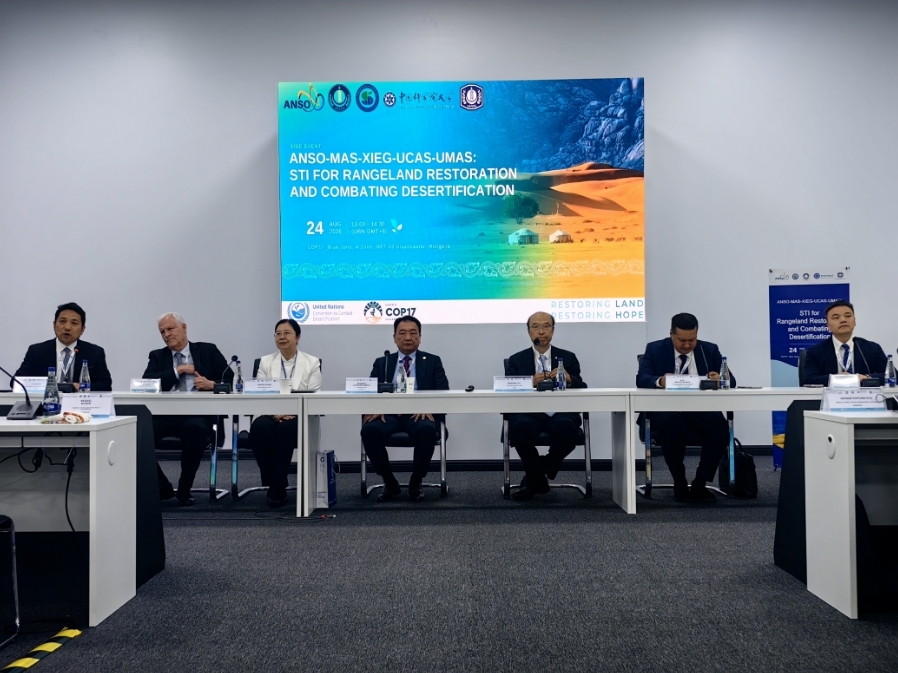
On the afternoon of 24 August, the second ANSO side‑event at the 17th Session of the Conference of the Parties to the United Nations Convention to Combat Desertification (UNCCD COP17), entitled “Green Technology for Sustainable Rangeland and Livelihood System”, was held in the Ögedei Hall, Green Zone of COP17, Ulaanbaatar, Mongolia. This public‑focused side‑event was co‑hosted by ANSO, the Mongolian Academy of Sciences (MAS), the Xinjiang Institute of Ecology and Geography, Chinese Academy of Sciences (XIEG), the University of Chinese Academy of Sciences (UCAS) and the University of the Mongolian Academy of Sciences (UMAS). Scholars, government officials and enterprise representatives from China, Mongolia, Kazakhstan, Mauritania, Japan and other countries held interactive discussions with the public on new pathways for the coordinated development of rangeland restoration and livelihood improvement.
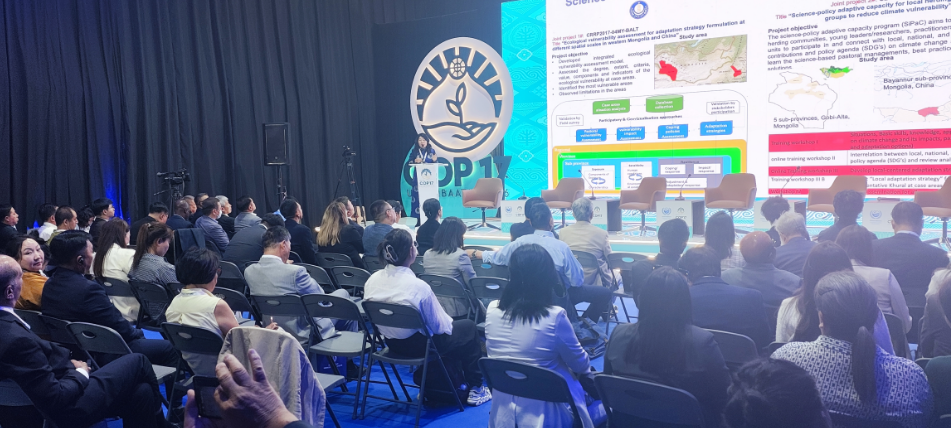
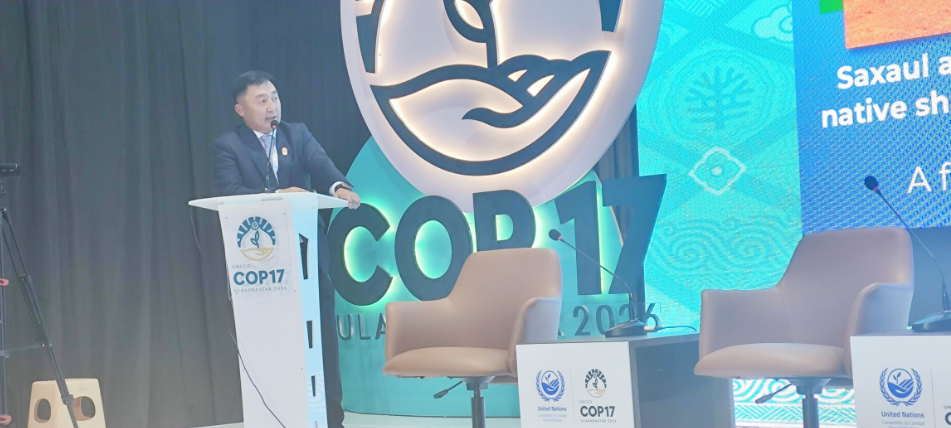
The opening ceremony and keynote session were co‑chaired by Professor HU Ronghai from UCAS and Professor Battogtokh Dorjgotov from UMAS. Professor WANG Yanfen, Vice‑President of UCAS; B. Avid, Vice‑President of UMAS; and Professor DUAN Weili, Deputy Director of XIEG, delivered opening remarks centered on the side‑event theme in line with the five‑action framework of the ANSO Dryland Sustainable Development Initiative. Prof. B. Avid highlighted that the Green‑Zone side‑event serves as a pioneering practice to implement the ANSO Initiative, with an aim to advance multilateral collaboration and strengthen science‑based empowerment. Prof. WANG Yanfen and Deputy Director DUAN Weili pointed out that scientific research should address livelihood‑related challenges, and the multi‑stakeholder dialogue at this side‑event will help deliver such research outcomes.
During the keynote session, Prof. LEI Jiaqiang, Dr. YU Xiang from XIEG put forward recommendations for follow‑up activities under the ANSO Initiative. Dr. Balt Suvdantsetseg from MAS presented a practical win‑win solution for rangeland restoration and livelihood improvement suited to drylands in Central Asia. Director Dash-Ochir Batmagnai from environmental agency, governmental office of the Gobi-Altai province, Mongolia, and Researcher YUAN Hongbo from the Desertification Control Research Institute of Gansu province (China) shared local‑level practices and ongoing challenges with the public, and raised three questions requiring solutions by scientific institutions and enterprises.
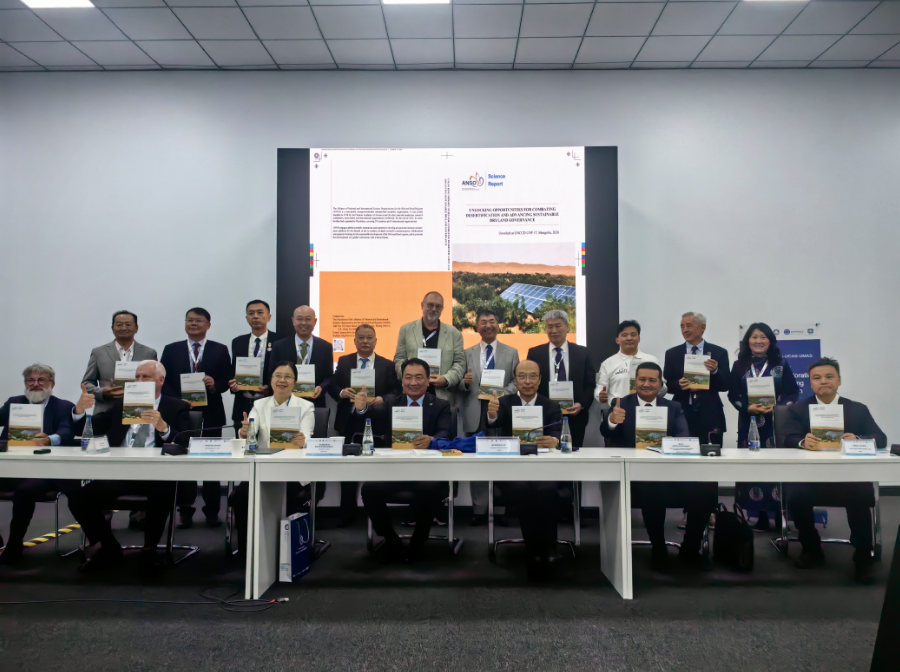
The round‑table discussion was co‑chaired by Professor Alishir Kurban from XIEG and YI Zhijun, Deputy Director of the ANSO Secretariat. The panelists included Professor DU Mingyuan (XIEG), Ms. G. Oyungerel (Department of Natural Resources Policy and Sustainable Use, Ministry of Environment and Climate Change, Mongolia), Dr. Shynar Tustubayeva (Astana International University, Kazakhstan), Chairman LIU Tao (Sinoway Forest Technology Co., Ltd. China), Associate Professor Akihiro Oba (Chuo University, Japan,), and Dr. Marcelin Sanou (Pan‑African Agency of the Great Green Wall, Mauritania). Targeting the three questions raised by the above provincial authority, the panelists proposed solutions drawing on their respective professional backgrounds and work experience. They also outlined their proposals aligned with the ANSO Initiative. The public responded positively to the panelists’ proposals and welcomed the idea to establish a cooperation and exchange mechanism. This side‑event further enhanced the public to understand ANSO’s mission.







 No.16 Lincui Road, Chaoyang District, Beijing, China
 86-10-84097121
 anso-public@anso.org.cn