
中文
-
About ANSO
-
News & Media
-
Members
-
Events
-
Programs
-
Publications
-
Get Involved
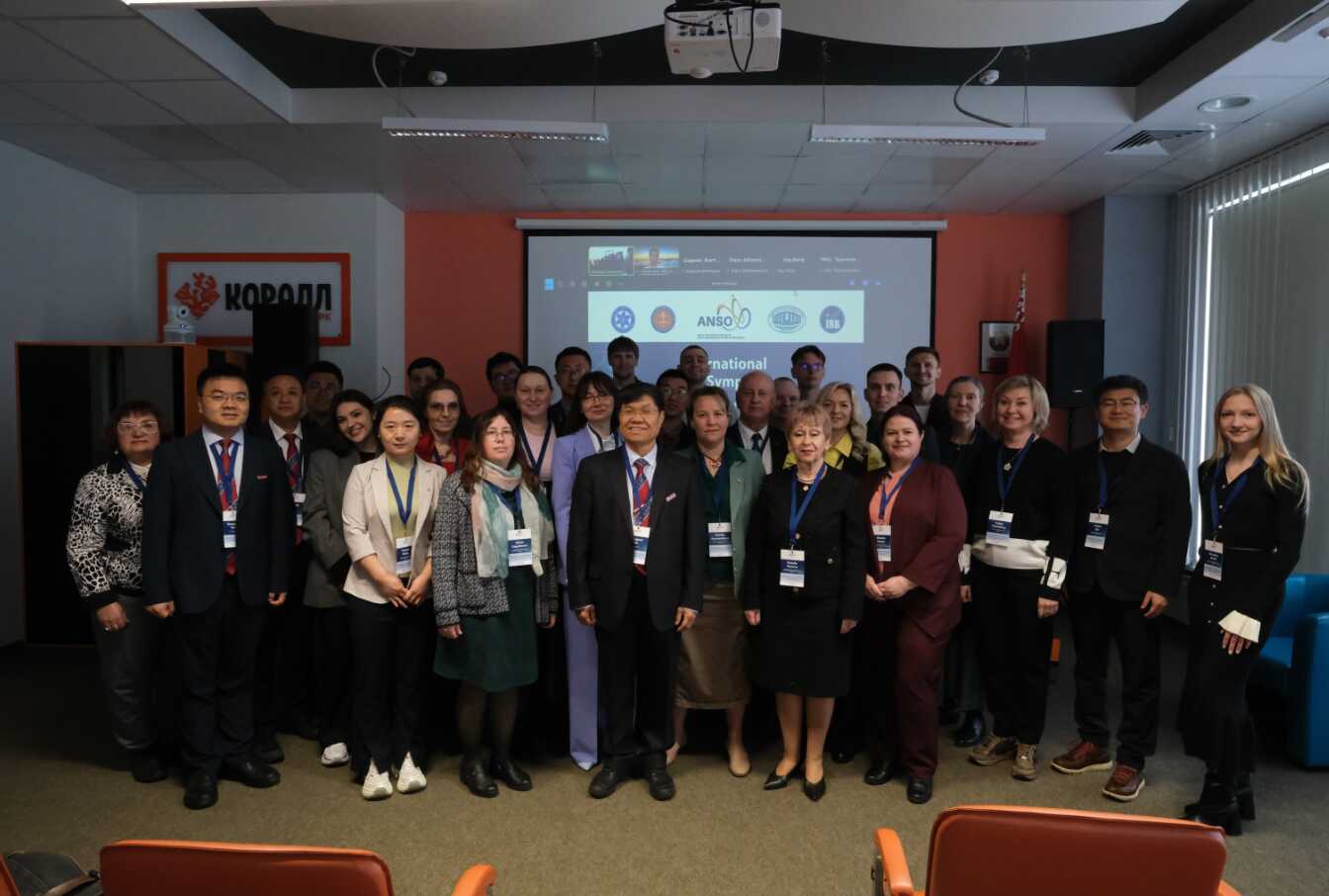
June 8-10, the 26th Meeting of the Commission on Science and Technology for Sustainable Development in the South (COMSATS) Coordinating Council was successfully held at Institut Teknologi Sepuluh Nopember (ITS) in Surabaya, Indonesia. Dr. YI Zhijun, Deputy Director of the ANSO Secretariat, was invited to attend the meeting of the Council as an observer. He extended his congratulations on the opening of the meeting and to the newly elected chairperson of the Council. The Council meeting reviewed the organization’s activities for the October 2024 – May 2026 period and discussed the proposed new initiatives, including the establishment of an ISO-standard Nano Tech Lab, the development of an electric vehicle program, and the reinforcement of funding mechanisms through the Endowment Fund.
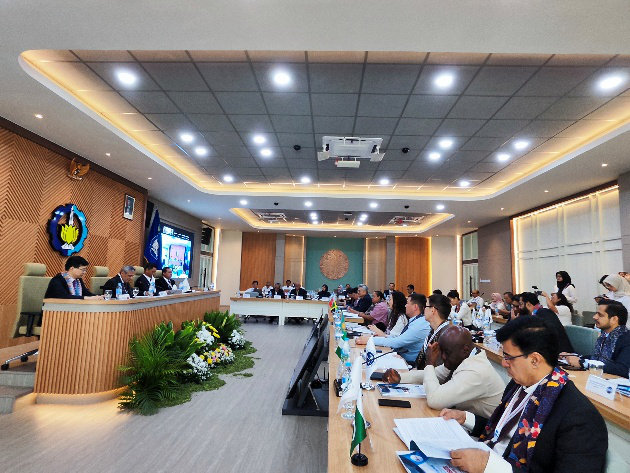
ITS Rector Prof. Ir. Bambang Pramujati, warmly welcomed delegations from 27 member countries. He noted that research collaboration and academic exchanges can deliver practical solutions for communities across the Global South. As the only Indonesian university affiliated with COMSATS, ITS’ role as host represents a strategic opportunity for Indonesia to expand its presence and contribution in international science diplomacy. Dr. Mohammad Nafees Zakaria, the COMSATS Executive Director, emphasized that sustained investment in research and development is a fundamental driver of progress for developing nations. He encouraged COMSATS member countries to jointly develop and share solutions to local challenges amid the rapid advancement of artificial intelligence (AI), biotechnology, nanotechnology and quantum computing.
Digitalization has become a core driver of transformation across all aspects of human life. Jointly organized with ANSO, the Conference on Emerging Technologies for Sustainable Development took place on June 10. It aims to deepen partnerships among developing countries and nations of the Global South. Prof. LIU Weidong, Executive Director of ANSO, delivered pre-recorded remarks at the opening ceremony, noting that the partnership between ANSO and COMSATS is strong, practical and results-oriented. COMSATS’ practices fully demonstrate how science, technology and innovation bring tangible benefits to people’s lives. ANSO looks forward to working with COMSATS to build a greener, more inclusive and more prosperous future for countries of the Global South. Fauzan Adziman, Director-General of Research and Development at the Ministry of Higher Education, Science, and Technology of the Republic of Indonesia, emphasized that innovation lies not only in science and technology but also in collaboration. He mentioned that advanced technologies can be applied as sustainable solutions to challenges in digital and industrial transformation.
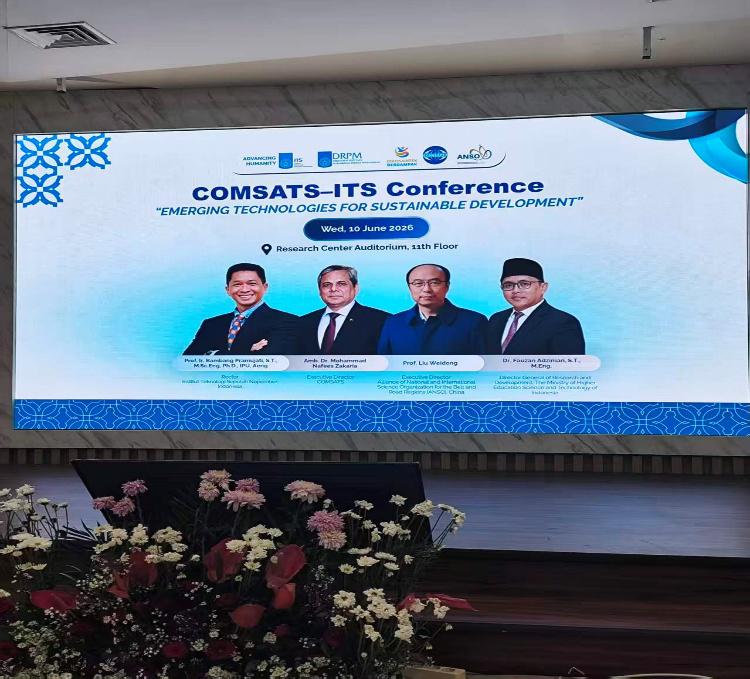
The Conference featured presentations on research achievements delivered by representatives from 25 Centers of Excellence, observer delegations and ITS, reflecting participation from a wide range of research and academic institutions across the Global South. On behalf of the ANSO Secretariat, Dr. YI Zhijun introduced one of the UNESCO-approved Programmes entitled ANSO Africa Hub of Science & Innovation during the Conference session on STI Policies, Innovation Ecosystems and Technology Governance in developing countries.
About COMSATS and ITS:
The Commission on Science and Technology for Sustainable Development in the South (COMSATS) was conceived by Pakistani Nobel Laureate, Prof. Dr. Abdus Salam, in recognition of the increasingly widening gap of scientific knowledge and economic development between the North and the South. In 1994, on the invitation from the Prime Minister of Pakistan, representatives from several developing countries met on 4th and 5th October in Islamabad and agreed to establish the Commission as a high-level forum, represented by Heads of State/Government, aiming at sustainable socio-economic uplift of the developing countries through appropriate applications of science and technology. (https://comsats.org/introduction/)
Institut Teknologi Sepuluh Nopember (ITS), established in 1960, is one of Indonesia’s leading universities, with a strong emphasis on science, engineering, and innovation. Based in Surabaya, ITS is committed to advancing global sustainable development through cutting-edge research, technological innovation, and collaboration with industry. (https://www.its.ac.id/en/)







 No.16 Lincui Road, Chaoyang District, Beijing, China
 86-10-84097121
 anso-public@anso.org.cn